

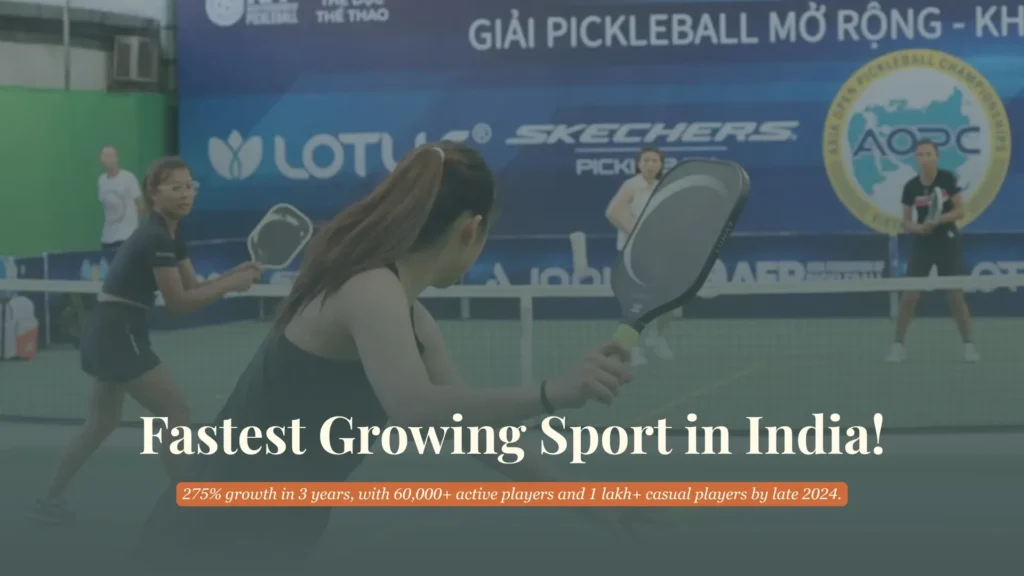
Pickleball is taking India by storm.
A sport that blends elements of tennis, badminton, and table tennis, its growth has been nothing short of phenomenal. We have seen a 275% jump in just three years, with over 60,000 active players and over 1 lakh casual players trying their hand at the game by the end of 2024.
Investors and startups have taken note, betting that pickleball might just be India’s next sporting revolution—similar to how the IPL transformed cricket. But is this just a fad, or are we witnessing a shift in emerging market trends that smart investors should watch?
From Cricket to Pickleball: A Shift in Consumption
Rewind to 2014, and the scenario was different. Cricket’s TV viewership was plummeting, with Gross Rating Points (GRP) dropping by 40%. Then came the Pro Kabaddi League, attracting 435 million viewers and proving Indians were ready for new sports.
Post-pandemic, the void for a fun, low-contact, community-driven activity was filled perfectly by Pickleball. It caters to everyone—from Gen Alpha to Boomers.
1. What Exactly is Pickleball?
Pickleball originated in 1965 in the US as a backyard family game. It gained traction as an easy-to-learn sport played on a smaller court with paddles and a perforated plastic ball.
-
Why the Name? It’s a debate! Some say it was named after the inventor’s dog, “Pickles.” Others claim it comes from the term “pickle boat,” referring to a rowing crew of leftover oarsmen—much like the mix of sports that inspired the game.
-
How is it Played? Think of a badminton-sized court with a net lower than tennis. Players use paddles to hit a plastic ball (with holes) back and forth. The goal? Prevent your opponent from returning the shot.
2. The Meteoric Rise in India
While the sport appeared around 2014, the real boom was post-pandemic. It became a social fitness activity rather than just a competitive sport.
The Growth Numbers Speak for Themselves:
-
Early 2024: 200 operational courts.
-
Present Day: 1,200+ courts (adding 3–4 new ones weekly).
-
2028 Projection: Over 1 million active players and 2,500 courts.
3. Why Investors are Betting Big
With rapid growth comes rapid capital. From sports startups to venture capital firms, everyone wants a slice of the pie.
Big Deals & Startups:
-
Goodland Pickleball raised ₹78 lakhs on Shark Tank.
-
GoRally (Bengaluru) secured $750,000 from top investors.
The influx of funding isn’t just for courts; it covers equipment, coaching, and booking platforms. For investors, this represents a new avenue in strategic alternative investments.
4. The Ecosystem: More Than Just a Sport
Pickleball is becoming a lifestyle. Much like the US model—which boasts sports cafés and social leagues—India is building a similar ecosystem.
It’s no longer just about the game; it’s about the “Post-Match Social.” Weekend tournaments and community events are transforming pickleball into a lifestyle brand, similar to yoga studios or premium gyms.
5. Challenges: Space & Infrastructure
Despite the boom, hurdles remain.
-
Urban Space: In cities where space is premium, building new courts is tough.
-
Adaptation: Gyms and tennis courts are converting spaces for pickleball, but this needs careful management to avoid “premiumisation”—which could turn it into an elite-only sport like golf.
6. Technology & Community Growth
Technology is fueling the fire. From AI-powered coaching apps to simple booking platforms, tech makes the sport accessible.
Social media (Instagram/YouTube) and influencers have amplified the reach, creating online communities that translate into offline footfall.

7. Universal Appeal: A Sport for All Ages
Why is it growing so fast? Low barrier to entry. Unlike tennis, which requires months of training, you can play pickleball in 20 minutes. It bridges generations—grandparents can play competitively with their grandchildren.
8. Learning from the Billion-Dollar US Model
The US turned pickleball into a billion-dollar industry by focusing on the “experience.”
-
Merchandise Lines
-
Dedicated Booking Apps (PicklePlay, DUPR)
-
Sports Cafés
India is poised to replicate this by integrating social, technological, and commercial elements into a single ecosystem.
9. Revenue Streams for Entrepreneurs
For those looking at the business side, the opportunities extend far beyond court rentals.
Key Monetisation Avenues:
- Tournaments: Sponsorships and ticket sales.
- Equipment: Paddles, apparel, and accessories.
- Training Academies: Professional coaching centers.
- Booking Platforms: Tech solutions for court management.
Entrepreneurs entering this space must focus on solid strategic financial planning to manage these new revenue streams effectively.
10. The Need for Government Support
For long-term sustainability, pickleball needs to move from “recreational” to “mainstream.”
-
School Curriculums: Introducing it at the grassroots level.
-
Infrastructure: Government initiatives to provide affordable access in non-metro areas.
11. Building a Thriving Community
The heart of pickleball is its community. Local clubs and housing societies are becoming hubs for the sport. By keeping equipment affordable and offering free introductory sessions, the community ensures the sport remains inclusive.
12. A Fitness Revolution
It’s the perfect alternative to a monotonous gym routine.
-
Cardio Health: Sustained movement.
-
Agility: Fast-paced reflexes.
-
Weight Management: High calorie burn with low impact on joints.
13. Inclusivity: Women & Wealth in Sports
As the sport grows, we must ensure it doesn’t become a “boys’ club.” Creating safe, welcoming spaces for women—through dedicated leagues and workshops—is essential.
At Dhanvesttor, we believe in empowerment, whether it’s on the court or in your portfolio. Encouraging financial independence for women parallels the need for female role models in sports leadership.
14. Corporate Sponsorships
Brands are eager to tap into this growing audience. From celebrity-owned teams to franchise leagues, corporate money is fueling visibility, making the sport more attractive to professional players and broadcasters.
15. The Future: Sustainable Growth
The future looks promising, but balance is key.
-
Affordability: Keep it accessible.
-
Collaboration: Private and Public sectors must work together.
-
Innovation: Use tech to sustain engagement.
Conclusion Pickleball is more than a sport; it’s a phenomenon. With 275% growth and enthusiastic investor backing, it is transforming India’s sports culture. As India gears up for this revolution, the opportunity for players, investors, and entrepreneurs is immense.